Ryan's Class Notes
With all of this snow, it has been challenging to get out into the field to continue our water quality monitoring program. It has been a good opportunity to explore the effects of climate change within the classroom and how it creates extreme weather conditions and can have an impact on temperature fluctuations. Students explored the polar vortex conditions that brought over 2 feet of snow to different areas around Long Island and we explored some of the different forecast models that are used to predict snow fall and other weather conditions.
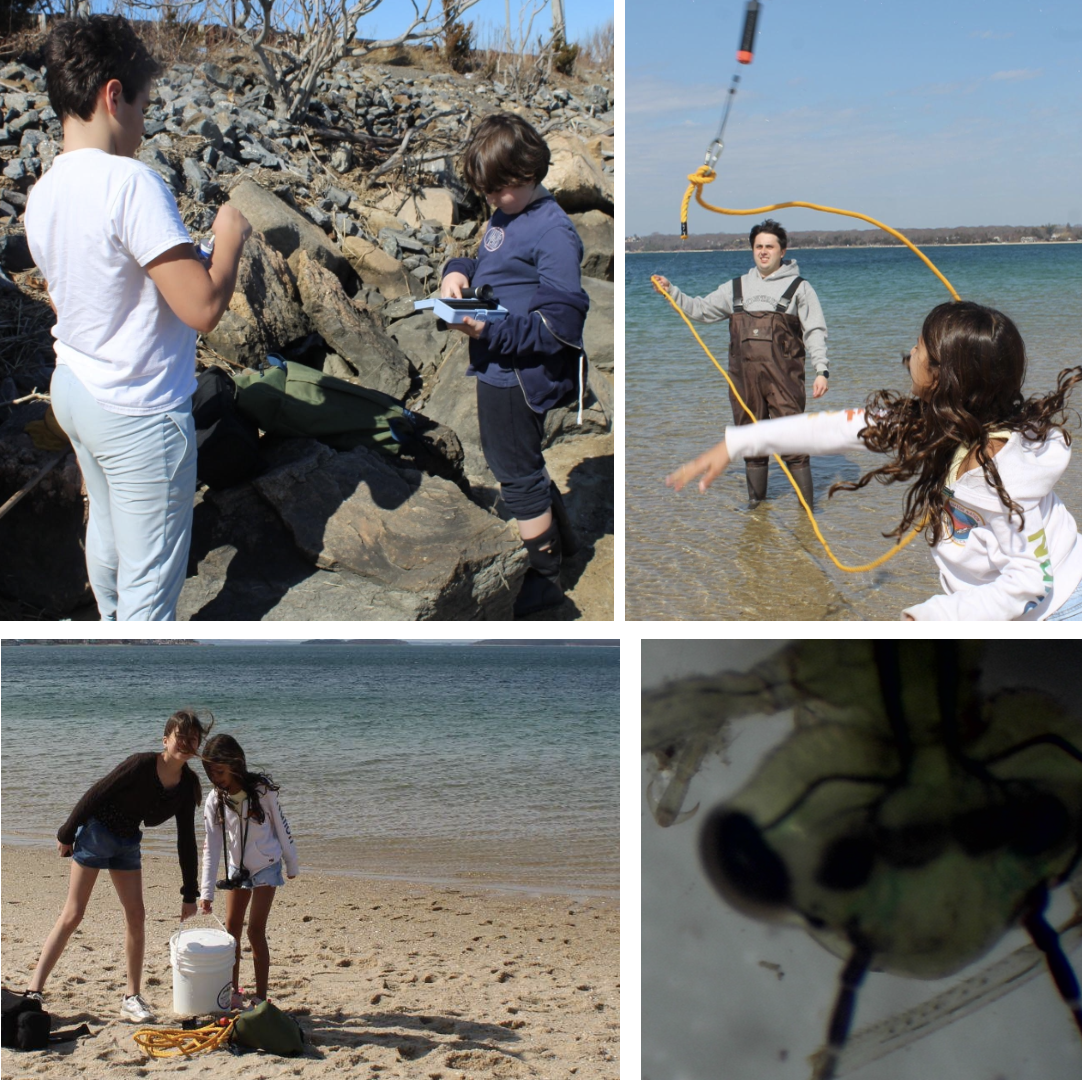
As the snow has melted, we have been able to get out into the field recently. We explored two areas where we collected three samples to analyze different environmental parameters (pH, temperature, and salinity). These locations included Noyack Bay, Sag Harbor Cove, and Trout Pond. At Noyack Bay we collected sand samples and water samples to transport back to the classroom to begin the setup of our salt water tank. We will be monitoring the conditions of the tank in the classroom and making observations of what happens, although the tank looks bare, there are microscopic organisms suspended in the water and beneath the sand that are viewable from a microscope.
The senior learners have been working away on their endangered/threatened species projects, which will be presented during the spring festival!